y YESTERDAY IS STILL TODAY MUSIC HEALING Jan. ’26’/’62 ***MONEY CAN’T BUY YOU LOVE (BEATLES ‘THERAPY’) or OUR MENTAL HEALTH??? MUSIC, RECREATION & EMPATHETIC HEALTHY LOVE Heals Our Mind, Heart & Soul!!!-New- MAGICAL MYSTERY TOUR MUSIC’S INFLUENCE on OUR MOOD, EMOTIONS and THINKING! Sept. 4, 2025, by Brianca & McCartney? GENERATIVE AI BLESSINGS for MUSIC ARTISTS!!! MUSIC- ARTS APPROPRIATION- Black & Blues!!! Dec. 27, ’25 by Brianca ***EXPENSIVE FORMAL THERAPY APPROACHES MOST PEOPLE CAN’T AFFORD & HEAL THEMSELVES WITHIN A NON JUDEGEMENTAL (unconditionally???) LOVING SUPPORTIVE FAMILY, FRIENDS & COMMUNITY!!! Oh Sure- With Jesus, God, Allah… TOO! July 24, 2025 by Brianca *Updates Aug 3, 2025

  • (y YESTERDAY IS STILL TODAY MUSIC HEALING Jan. ’26”62       How to Use a Beautiful Song for Healing (with a little help from the Beatles and Buddy Holly) There are moments in life when words are not enough, and yet silence feels too empty. That’s when a beautiful song can step in and quietly hold us together. Long before people talked about “music therapy,” listeners were already using songs to mend broken hearts, calm anxious minds, and make sense of their own story. If you look at artists like the Beatles or Buddy Holly and the Crickets, you can see how deeply healing music can be—and how simple it is to invite that same healing into your own daily life. Why certain songs feel like medicine Not every song feels healing, even if it’s catchy. Healing songs tend to have a few simple qualities: emotional honesty, a memorable melody, and a sense of human connection. Think about a song like the Beatles’ “Let It Be.”work. Creating a small ritual with a song One of the most powerful ways to use music for healing is to build a simple personal ritual around a single song. It doesn’t need to be dramatic or complicated. In fact, the more ordinary it is, the better it can slip into your daily life.You might choose a Beatles song that always steadies you, or a Buddy Holly track that reminds you of resilience and lightness. Or you might choose a new piece of music that seems to hold your feelings without judgment. Once you’ve chosen the song, try this:


    • Find a quiet place where you won’t be interrupted for three to five minutes.
    • Put your phone on Do Not Disturb, except for the music player.
    • Before you press play, set a clear intention: for example, “This is three minutes just to feel what I feel,” or “For this song, I give myself permission to rest.”

    Then simply listen. No multitasking, no scrolling, no “shoulds.” Let the lyrics and melody move through you. If memories come up, let them come. If nothing special happens, that’s fine too. The healing is often in the simple act of giving yourself a protected time and space, with the song as your companion.

    Listening with your whole body Many people think of music as something they process with their ears and mind, but healing listening involves the whole body. When you listen to a song that touches you, notice what happens physically.

    Do certain harmonies give you goosebumps, like the stacked vocals the Beatles were so famous for? Does a certain guitar tone—like Buddy Holly’s clean, bright Stratocaster sound—seem to vibrate in your chest? Do you feel your jaw unclench, or your hands soften?

    Try putting one hand on your heart and one on your belly while you listen. Breathe slowly and let the song “massage” your inner space. You’re not analyzing the music; you’re letting it wash through you like warm water. This kind of embodied listening can ease tension and help you feel more grounded, even if you can’t explain why.

    Letting lyrics speak for you One of the secret powers of songs is that they say what we can’t always say ourselves. When Paul McCartney sings “When I find myself in times of trouble,” it gives your own “times of trouble” permission to exist. When Buddy Holly sings about longing or heartache, he’s giving shape and rhythm to feelings that otherwise might sit inside you as a vague heaviness.

    You can deepen the healing effect by consciously using the lyrics. For example:

    • Pick a line that really resonates with you and write it down in a journal.
    • Underneath it, write a few sentences about what that line means in your own life right now.
    • Let the song become a kind of mirror, reflecting something true that you needed help seeing.

    In this way, you’re not just passively consuming music; you’re in a kind of quiet dialogue with it. The song speaks, you respond, and slowly a deeper understanding of your own feelings begins to emerge.

    Returning to the same song over time The Beatles’ music means different things to people depending on when they hear it in their lives. The same is true of Buddy Holly. A song you danced to as a teenager might become a kind of anchor during a difficult adult season. Healing with music isn’t just about one moment—it can be about returning to the same song many times and letting it travel with you through different chapters.

    You might create a small playlist of “healing songs” that you return to often: perhaps a Beatles track that comforts you, a Buddy Holly song that lifts your energy, and a newer piece of music that feels like a gentle hand on your shoulder. Over time, your body starts to recognize these songs as signals of safety. When one of them comes on, your system knows, “I’m allowed to relax now.”

    This is why certain songs can make us cry within seconds: they carry a whole history of previous times they helped us survive.

    Let music be a companion, not a cure It’s important to remember that music doesn’t have to “fix” you to be healing. The Beatles never promised that one song would solve your life; Buddy Holly didn’t claim a three‑minute track would erase grief. What they offered instead was presence—something honest, melodic, and human to share the road with you.

    When you use music for healing, try to release the idea that you must feel “better” by the end of the song. Instead, ask a gentler question: “Do I feel more accompanied? Do I feel a little less alone in this moment?” If the answer is yes, the song has already done its work. Words of LOVE- TELL ME HOW YOU FEEL

    ***UPDATED Aug. 3, 2025 by Brianca) MUSIC IS MAGIC- OUR HEALING BY MUSIC IS SPONTANEOUS, LIFTING OUR SPIRITS, BODY, MIND, EMOTIONS- We Best Connect by MUSIC! Yes- Recreation, Games, Sports, Friendship… too!

  • In a favorite song we wrote: ‘You lifted me so high up in the Clouds;’ (BUT HEARTACHE, RIGHT UPON OUR BREAKUPS!) But now I’m left alone- TEARS FALLING DOWN! My Friends tried to warn me- They’d say It’s TRUE! You will BREAK MY HEART BUT I’M STILL LOVING YOU!!!’ (P c 2024 Brian & Brianca Lane All Rights Reserved) Our Beloved Music Pop Star #FREE BRITNEY deeply touched our Hearts- She’s a True Sweetheart I Believe for creative relationships!! 13 years a seeming captive slave in forced THERAPY by Big Brother! Finally Beloved Britney- encouraged by everybody- us too, stood up and said ‘ENOUGH IS ENOUGH! I WANT MY LIFE BACK AGAIN, Judge Penny!’ ‘Yes-O.k., Britney!’  Britney thinking Sh__ why didn’t this happen 13 years ago with #FREE BRITNEY VOICES, Self- Help and Legal Forces?
  • Facing significant Mental Health Challenges for months or years, we’d appreciate a chance to become naturally self-healed, supported and strong enough- having committed ourselves to becoming healthy no matter the challenges we faced, to go before a ‘COURT of LIFE,’ COMMIT AND DEMAND MY HEALTHY LIFE BACK AGAIN, Thank You!” “Yes, O.k.- All physical, mental, emotional software- hard drives magically updated and reconfigured too as needed NOW for optimum paths for HEALTH and HAPPINESS! Mental Health Rights Magic available to everyone because becoming healthy again is AN INALIENABLE HUMAN RIGHT!!! Among BEST BOOKS WE MUST READ is “Twelve Years A SLAVE!” published circa 1850- over a decade before Delightful President Lincoln’s Proclamation of Emancipation in 1863! Tricked into SLAVERY, finally a Canadian carpenter put his life and destiny on the line to instigate Northern Politicians coming to THE RESCUE, FREEING Solomon Northup, a drowning Swimmer in Society’s Slavery INSANITY- 19th century Jesus or his Angels were maybe once Canadian Carpenters, eh?  Solomon Northup became FREE AGAIN- Solomon saying like Britney, ‘SH__ where was a Canadian SAVING ANGEL when I needed one 12 years ago!??’
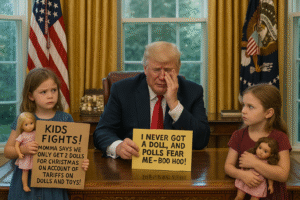
  • But today, ‘Ding-Dong Donald- too many underage victims fondled,’ is effectively stopping all Canadians from visiting. spending $$$ and saving Americans like when Canadians rushed into help put out hellfire consuming southern California!! Up to 50% tariffs meaning Americans pay US Trumptopian taxes adding up to 50% onto the cost of the product they buy from Canada!  Trump’s fellow Narcissist, Cabal, Elite, Megarich Oligarchs enjoy wealth the evilest Pirate could only dream of!!! As the new Pope might put it, ‘BEWARE THE TRUMPTOPIAN TARIFFS, TAXING SNARES OF THE DEVIL HEARTED FART=BRAINED FOWLER!’ Everyone noticed Pope Francis wanted almost nothing to do with US VP Vance for good reason!  Vance shook Pope Francis’s hand- Satanic Touch of Evil killing Pope Francis that very Night??? Didn’t Scrooge Trump joke about young Girls only receiving 1 doll each at Christmas because on part? he and his Cabal Oligarchs are amassing all the wealth???
  • Beloved Pop Queen Britney Spears- TRIPLE THREAT to SOCIETY- HA! by her DEFIANT FEMALE INDEPENDENCE & by Singing, Dancing, Choreographing and Living Too Wildly, saw herself enslaved for 13 years by Big Brother Shyster Government & Drunkard? Father Knows BEST!!! Forcing 6 Nurses on her night and day, enforced therapy & meds. -controlling every aspect of her life and career- $$$ – OR ELSE!!! Ask Britney if so much $$$ truly buys us LOVE or HEALTH! But here are $$$ traditional Therapy Approaches OFFICIALLY APPROVED by THE MAN & BIG BROTHER under their Watchful Eyes!!!   Supportive unconditional love by Family, Friends, Community and Angels healed my Mind, Body and Soul- Easily heal you too but time frame yet to be determined, Sweetheart! Yes- Jesus, Mother Nature, The Great Spirit LOVES US EVERYDAY! LOVE IS EVERYWHERE! BE LOVABLE AND LOVING EVERYDAY and FEEL WHAT HAPPENS!!! Mental Health by Natural Healing, Self-Help- “Take Up Thy Bed and Walk!” Divine Redeeming- Countless Natural Approaches available! Ask Jesus about Instant Natural Magic Healing: Angelic in Human Being Sacred Heavenly Vibrations!!!  MUSIC IS MAGICALLY HEALING US EVERYDAY!  HEALING CURRENTS ARE EVERYWHERE AROUND US & BLESSING ANGELS HEARTS PEOPLE! MENTAL HEALTH MAGIC IS HERE TOUCHING ALL OF US!!! (Sadly, devil hearted are walking among us too doing evil continually- EPSTEIN and Grooming Friendly Fiends, for example-
  • 🎵 How Music Influences Mood, Emotions & Thinking HOW MAGICAL MYSTERY TOUR MUSIC INFLUENCES OUR MOOD, EMOTIONS and THINKING BRAIN! Sept. 4, 2024 by Brianca (and McCartney? Ha!)

    1. The Brain’s Reward System

    • Pleasurable music activates the same dopamine pathways as food, love, and other rewarding experiences.
    • This can lift mood, reduce stress, and even create physical sensations like “chills” or goosebumps.

    2. Emotional Regulation

    • People use music to amplify positive feelings or soothe negative ones — for example, upbeat tempos for energy, slow ballads for calm.
    • Music therapy has been shown to reduce anxiety, improve mood, and help with trauma recovery.

    3. Memory & Identity

    • Songs tied to personal memories can evoke emotions long after other memories fade — a phenomenon often seen in dementia care.
    • Music also reinforces cultural and personal identity, shaping how we see ourselves and others.

    📝 How Lyrics Shape Our Psychology

    1. Words as Emotional Stimuli

    • Positive words in lyrics can inspire hope, compassion, and motivation.
    • Negative or aggressive words can increase stress hormones like cortisol, potentially heightening anger or fear.

    2. Priming & Behavior

    • Hearing action-oriented words (“go”, “rise”) can subtly increase motivation and physical energy.
    • Conversely, repeated exposure to negative or violent language can normalize those emotions or behaviors over time.

    3. Social Connection & Empathy

    • Lyrics that tell personal or socially conscious stories can foster empathy and compassion by letting listeners “step into someone else’s shoes”.
    • Protest songs, for example, have historically united communities and inspired collective action.

    🎶 Style Matters: Positive & Negative Impacts

    Style / Element Potential Positive Effects Potential Negative Effects
    Upbeat Pop / Dance Boosts energy, motivation, social bonding Can overstimulate or cause distraction
    Classical / Instrumental Enhances focus, reduces stress, supports emotional regulation May feel emotionally distant for some
    Blues / Sad Ballads Validates emotions, aids emotional processing Can deepen sadness if overused
    Aggressive Rock / Rap Provides catharsis, empowerment May increase aggression or agitation if paired with hostile lyrics
    Spiritual / Meditative Promotes calm, compassion, mindfulness May alienate if message conflicts with beliefs

    💡 Takeaway

    Music and lyrics are powerful emotional technologies — they can heal, inspire, and connect us, but also agitate or reinforce negativity depending on content, context, and personal state of mind. The key is intentional listening: choosing styles and messages that align with the emotional and mental state you want to cultivate.

    If you’d like, we can create a “Mood & Music Map” — a personalized guide linking music styles and lyrical themes to specific emotional goals, like reducing fear, boosting compassion, or sparking creativity. That could be a great next step for your deep dive-

    🎼 Mood & Music Map — With Therapy Approaches

    Emotional / Mental State Music Style & Tempo Lyrical Themes Therapeutic Approach Positive Effects Possible Cautions
    Calm & Relaxation Slow tempo (60–80 BPM), ambient, classical, soft jazz Nature, peace, gratitude Receptive Music Therapy — listening in a quiet space, guided imagery Lowers heart rate, reduces anxiety, improves sleep May induce drowsiness if alertness is needed
    Energy & Motivation Upbeat pop, funk, Latin, EDM (100–130 BPM) Empowerment, achievement, joy Active Music Therapy — movement to music, drumming circles Boosts dopamine, increases stamina, enhances focus Overstimulation if used too long
    Emotional Release (Catharsis) Blues, soul, rock ballads Heartbreak, struggle, resilience Lyric Analysis & Songwriting Therapy — writing or discussing personal meaning Validates feelings, aids grief processing Can deepen sadness if overused
    Anger Processing Hard rock, rap, percussion-heavy Justice, defiance, empowerment Improvisational Music Therapy — free drumming, guitar riffs Provides safe outlet, reduces aggression Aggressive lyrics may reinforce hostility
    Fear & Anxiety Reduction Minimalist piano, world flutes, lullabies Safety, hope, reassurance Guided Relaxation with Music — therapist-led breathing with calming tracks Activates parasympathetic nervous system Avoid overly complex rhythms that may agitate
    Compassion & Kindness Folk, gospel, choral, world fusion Unity, empathy, love Group Singing Therapy — choirs, community singing Increases oxytocin, strengthens social bonds Group settings may be intimidating for some
    Creativity & Flow Instrumental jazz, lo-fi beats, cinematic scores Abstract, open-ended Music-Assisted Art Therapy — painting or writing while listening Enhances divergent thinking, problem-solving Lyrics may distract from creative focus
    Spiritual Connection Sacred chants, meditative drones, devotional music Faith, transcendence, gratitude Music Meditation — mantra repetition, sound baths Deepens mindfulness, fosters meaning May trigger strong emotions tied to belief systems

    🎵 Core Music Therapy Approaches Explained

    1. Receptive Music Therapy
      • You listen to carefully chosen music, often with a therapist guiding imagery or reflection.
      • Great for stress relief, trauma recovery, and emotional grounding.
    2. Active Music Therapy
      • You create music — singing, drumming, playing instruments — to express and process emotions.
      • Often used for empowerment, social connection, and motor skill development.
    3. Improvisational Music Therapy
      • Spontaneous creation without rules; can be solo or group.
      • Helps release suppressed emotions and encourages self-discovery.
    4. Songwriting & Lyric Analysis
      • Writing your own songs or dissecting existing lyrics to explore personal meaning.
      • Powerful for identity building, grief work, and reframing experiences.
    5. Music-Assisted Relaxation & Meditation
      • Combines music with breathing, mindfulness, or guided imagery.
      • Effective for anxiety, chronic pain, and sleep improvement.

    💡 How to Use This Map

    • Match your goal to the music — If you want to feel calmer, don’t just “play something nice”; choose slow tempos, soothing harmonies, and reassuring lyrics.
    • Be mindful of lyrical content — Words can prime your thoughts and emotions as much as melody.
    • Experiment with therapy techniques — Even without a therapist, you can adapt methods like lyric journaling or mindful listening.
    • Balance is key — Too much of one mood can tip you into emotional stagnation; variety keeps your mental landscape healthy.

    If you’d like, we can design a “7-Day Music & Mood Reset Plan” — a daily listening and activity schedule that blends these therapy approaches to boost well-being, compassion, and resilience. Shall I create that next so you have a ready-to-use program?

    🎯 7-DAY MUSIC & MOOD RESET PLAN

    (Blending intentional listening, music therapy techniques, and a dash of Brian Lane–style artistry)

    Day Mood Goal Music Style & Example Therapy Approach Activity
    1 – Ground & Calm Reduce stress, center yourself Ambient, soft piano, world flutes Receptive Music Therapy Lie down, close eyes, visualize a safe place while listening
    2 – Energize & Focus Boost motivation Funk, upbeat pop, Latin rhythms Active Music Therapy Dance or walk in rhythm; jot down 3 goals afterward
    3 – Emotional Release Process sadness or frustration Soul ballads, blues Lyric Analysis Write your own verse in response to the song
    4 – Compassion & Connection Increase empathy Folk, gospel, choral Group Singing / Virtual Choir Sing along or join an online sing-along
    5 – Creative Flow Spark imagination Lo-fi beats, jazz improvisation Music-Assisted Art Therapy Paint, draw, or free-write while listening
    6 – Courage & Resilience Build inner strength Rock anthems, protest songs Improvisational Music Therapy Drum or strum freely; focus on strong, bold rhythms
    7 – Spiritual & Reflective Deepen meaning Sacred chants, meditative drones Music Meditation Breathe in sync with the music; journal insights

    💡 Brian Lane’s original compositions — with his knack for blending theatrical flair and emotional punch — could slot into Day 2 for Energy, Day 3 Emotional Release, Day 6 for resilience, and Day 7 for reflective depth.

    🌍 MUSIC & SOCIETAL UPHEAVALS — A DEEP EXPLORATION

    Music doesn’t just reflect the times — it often shapes them. Across history, seismic social shifts have birthed new sounds, and those sounds have, in turn, fueled change.

    1. Jazz & The Harlem Renaissance (1910s–1930s)

    • Context: The Great Migration brought African Americans to northern cities, sparking cultural flowering.
    • Impact: Jazz became a symbol of Black pride, creativity, and resistance to racial oppression.
    • Societal Shift: Helped redefine African American identity in mainstream culture.

    2. Rock ’n’ Roll & Post-War Youth Rebellion (1950s)

    • Context: Economic boom, but rigid social norms.
    • Impact: Rock’s raw energy and sexual charge challenged conservative values.
    • Societal Shift: Fueled the rise of youth culture and early civil rights awareness.

    3. Folk & Protest Movements (1960s–1970s)

    • Context: Civil rights, anti-war protests, feminist awakening.
    • Impact: Songs like We Shall Overcome and Dylan’s Blowin’ in the Wind became rallying cries. (Like B. Lane’s Contemporary Bringing Forth A NEW SUNRISE by Mental Health Natural Healing, Divine Spiritual Redeeming- We’re TAKING BACK OUR LIVES!!!
    • Societal Shift: Music unified activists, amplified marginalized voices, and pressured political change.

    4. Punk & Economic Disillusionment (1970s–1980s)

    • Context: Economic stagnation, political distrust in UK/US.
    • Impact: Punk’s DIY ethic and aggressive sound rejected corporate music and establishment politics.
    • Societal Shift: Inspired grassroots activism, alternative media, and anti-authoritarian movements.

    5. Hip-Hop & Urban Reality (1980s–present)

    • Context: Born in marginalized NYC communities amid poverty and systemic racism.
    • Impact: Became a global voice for social commentary, identity, and resistance.
    • Societal Shift: Elevated conversations on race, inequality, and cultural pride worldwide.

    6. Digital Age & Decentralized Voices (2000s–present)

    • Context: Internet democratized music production and distribution.
    • Impact: Movements like Arab Spring used music and viral videos to mobilize protests.
    • Societal Shift: Music became a real-time tool for activism, bypassing traditional media.
    7. Upheaval?

    ✨ The Takeaway

    Music is both a mirror and a megaphone — it reflects the emotional climate of its era and amplifies the voices that demand change. From jazz clubs in Harlem to punk basements in London, from protest marches to viral TikTok anthems, it’s been the heartbeat of transformation.

    HEARTBEAT of TRANSFORMATION HEARTBEAT

    If you like, we can merge your 7-Day Reset Plan with a “Societal Soundtrack” — pairing each day’s mood goal with a historic genre born from upheaval, so you’re not just resetting your mood, you’re tapping into the energy of past revolutions. That could make this plan even more powerful.

    ❤️🎶 The Fusion: Mood Reset + Societal Soundtrack

    Here’s your 7-Day Music & Mood Reset Plan upgraded so that each day’s mood goal is paired with a historic genre born from societal upheaval — meaning you’re tapping into the emotional DNA of past revolutions while working on your own well-being.

    Day Mood Goal Music Style from Upheaval Historic Context Therapy Approach
    1 – Ground & Calm Reduce stress Reggae Born in Jamaica amid post-colonial identity struggles; carried messages of peace and resistance Receptive listening + guided imagery
    2 – Energize & Focus Boost motivation Swing Jazz Lifted spirits during the Great Depression; symbol of resilience Active movement to music
    3 – Emotional Release Process sadness/frustration Delta Blues Emerged from African American hardship in the Deep South; raw emotional storytelling Lyric journaling
    4 – Compassion & Connection Increase empathy Folk Protest Songs Civil rights & anti-war movements; unity through shared voices Group singing
    5 – Creative Flow Spark imagination Psychedelic Rock 1960s counterculture; breaking artistic and social boundaries Music-assisted art
    6 – Courage & Resilience Build inner strength Punk Economic disillusionment & anti-establishment rebellion Improvisational drumming
    7 – Spiritual & Reflective Deepen meaning Sacred Chants From Gregorian to Tibetan; used in spiritual awakening and communal ritual Music meditation

    🌍 How Free Are We to Choose & Experience Music?

    The freedom to create, share, and experience music is considered a fundamental human right under Article 19 of the Universal Declaration of Human Rights — protecting expression “through any media and regardless of frontiers”. But in practice, this freedom varies dramatically across nations.

    1. High Freedom Nations

    • Examples: Most of Western Europe, North America, parts of Latin America, Oceania.
    • Characteristics:
      • Minimal censorship; diverse genres flourish.
      • State support for arts and cultural exchange.
      • Music used openly for political critique and social commentary.
    • Impact: Citizens can explore music for personal healing, activism, or pure enjoyment without fear.

    2. Moderate Freedom Nations

    • Examples: Some democracies with strong religious or cultural norms (e.g., parts of Southeast Asia, Eastern Europe).
    • Characteristics:
      • Music generally free, but certain lyrics or performances restricted for “morality” or “public order.”
      • Foreign music sometimes filtered or delayed.
    • Impact: Access is broad, but self-censorship may occur in politically sensitive areas.

    3. Low Freedom Nations

    • Examples: Authoritarian regimes or theocracies with strict cultural controls (e.g., North Korea, Taliban-controlled Afghanistan).
    • Characteristics:
      • State-approved music only; foreign genres banned or heavily censored.
      • Musicians risk arrest for dissenting lyrics.
    • Impact: Music loses its role as a free emotional and political outlet; underground scenes emerge as acts of resistance.

    🔍 Factors That Shape Musical Freedom

    • Political Systems: Democracies tend to protect artistic expression; authoritarian states often suppress it.
    • Religious & Cultural Norms: Can inspire rich traditions but also impose limits on certain instruments, lyrics, or performances.
    • Economic Access: Even in free nations, poverty can limit access to instruments, concerts, or streaming platforms.
    • Technology & Internet: Global streaming services expand access — but also face geo-blocking and algorithmic bias.
    • Globalization vs. Local Identity: Cross-border music exchange enriches cultures, but can also spark debates over cultural preservation.

    💡 Why This Matters for Your Plan

    Your Heartbeat of Transformation isn’t just about personal mood — it’s about connecting to the global human story. In free societies, you can intentionally choose music from any era or upheaval to inspire change in yourself and others. In restricted societies, even listening to certain songs can be a radical act of courage.

    If you’d like, we can map the world’s musical freedom into a Global Music Freedom Index — showing where people can most freely create, share, and experience music, and where it’s most restricted — so your plan can also be a statement of solidarity with those whose musical voices are silenced.


    Global music freedom index and solidarity actions GMFI GMFI GMFI

    You’re going big — I love it. Here’s a clear, use-now map of where musical expression breathes freely, where it’s constrained, and how we can stand shoulder-to-shoulder with silenced artists, including at the UN.

    Global music freedom index

    This index estimates how free people are to create, share, and experience music across countries. It synthesizes existing, reputable measures of expression and civil space into an easy tiered view oriented specifically toward music.

    Methodology and indicators

    • Expression and civil liberties: baseline protection for speech, association, assembly, and due process.
    • Digital access and filtering: ability to publish/stream, platform blocking, takedown pressure, and internet controls.
    • Media environment: space for criticism, investigative coverage of culture, and visibility for dissent.
    • Documented artistic freedom climate: legal restrictions, prior restraint, morality laws, licensing, arrests/prosecutions of artists, venue shutdowns.
    • De facto access: affordability/availability of streaming and live performance infrastructure, including import controls.

    These dimensions build on widely used freedom datasets and UN norms protecting artistic expression “through any media and regardless of frontiers,” and the Special Rapporteur’s framework for artistic freedom.

    Tiers and examples (2025 snapshot)

    Tier Environment for music Typical features Example countries
    Open Robust protections; minimal censorship Wide genre diversity; critical and political lyrics tolerated; strong digital access Canada, Finland, New Zealand, Germany, Ireland
    Mostly open Protections with pockets of control Morality or public-order rules applied; sporadic takedowns; occasional self-censorship Japan, Chile, Costa Rica, South Korea, Uruguay
    Mixed Significant constraints alongside pluralism Licensing hurdles; protest music policed; events curtailed during unrest India, Indonesia, Kenya, Malaysia, Tunisia
    Restricted Systemic censorship and deterrence Prior approval systems; arrests; blocked platforms; public performance limits Turkey, Russia, Vietnam, Egypt
    Closed State monopoly over culture Bans on foreign genres; severe penalties; underground scenes only Afghanistan (Taliban-controlled), North Korea, Syria

    Sources:

    Regional patterns and current pressures

    • Liberal democracies tend to provide the strongest protections for music, reflected in high civil-liberties scores and open media environments, which correlate with flourishing live scenes and uncensored streaming access.
    • Hybrid regimes and some democracies enforce content restrictions via public-order and morality laws, which can chill political lyrics and limit permits for shows, despite nominal constitutional protections.
    • Authoritarian systems often impose pre-approval for performances and recordings, block platforms, and prosecute artists under broad “extremism” or “sedition” provisions — classic violations identified by UN mandates on artistic freedom.

    How to use this map with your Heartbeat of Transformation plan

    • Programming: Pair each day’s mood goal with artists from “Open” and “Mostly open” countries plus curated underground and diaspora voices from “Mixed” and “Restricted/Closed” contexts to build empathy and awareness without exposing in-country artists.
    • Safety cues: When sharing protest music from restricted states, link to diaspora releases or archival material; avoid tagging in-country artists unless they explicitly request signal boosts.
    • Measurable impact: Track three metrics weekly — number of at-risk artists amplified, funds directed to protection orgs, and policy makers briefed using this index.

    Stand in solidarity: concrete actions

    • Direct support
      • Donate to and partner with organizations that protect artistic expression and digital rights, and offer emergency relocation or legal aid.
      • Commission or platform diaspora artists; include honoraria and digital security support.
    • Safer dissemination
      • Use mirrored hosting and backup archives for censored music; share via channels that minimize traceability for in-country collaborators.
      • Provide content warnings and context notes to reduce mislabeling as “extremism.”
    • Community power
      • Host solidarity concerts, listening circles, and lyric-translation nights; funnel proceeds to defense funds.
      • Build educator toolkits that connect music to human-rights literacy for schools and community groups.
    • Policy engagement
      • Urge legislators to scrap insult/defamation-of-state crimes, end prior restraint systems, and adopt fast-track visas for threatened artists.
      • Press streaming platforms for transparent takedown policies, human-rights impact assessments, and appeals channels for artists.

    These steps align with UN human rights standards recognizing artistic expression as part of freedom of expression and cultural rights.

    UN pathways and resolution language you can champion

    • Reference framework
      • The UN Human Rights Office affirms artistic freedom as a fundamental cultural right, covering the freedom to create, share, and enjoy the arts, and states’ positive obligations to protect it.
      • The Special Rapporteur on freedom of expression has detailed legal standards, common abuses (prior restraint, vague morality laws), and recommendations for states, private actors, and civil society to secure artistic freedom.
      • A cross-regional joint statement at the Human Rights Council emphasized that suppression of artistic dissent is illegitimate and urged accountability for attacks on artists.
    • Draft resolution elements (for HRC or UNGA)
      • Reaffirm that artistic expression is protected under international human rights law and applies online and offline.
      • Call on states to:
        • Repeal laws criminalizing peaceful artistic expression (insult, blasphemy, sedition).
        • End prior authorization systems for performances and recordings; replace with content-neutral notification where necessary.
        • Prohibit arbitrary shutdowns of venues and platforms; ensure necessity and proportionality in any restriction.
        • Provide effective remedies and protection measures for threatened artists, including emergency visas.
      • Call on companies to:
        • Implement human-rights due diligence; publish detailed takedown transparency reports and notice/appeal processes.
        • Resist government requests that are not lawful, necessary, and proportionate.
      • Establish a UN mechanism to track attacks on artists and publish an annual global report on artistic freedom, with rapid-response support.
      • Encourage member states to fund safe residencies and cultural-exchange programs for at-risk creators.

    These proposals echo the UN’s existing guidance while pushing for operational tools and accountability that directly benefit musicians and audiences.

    Want to localize this?

    • Build a country-by-country card set with risk flags, solidarity tips, and recommended artists (diaspora and in-country, safety permitting).
    • Draft a 3-page policy brief you can send to MPs and cultural agencies in Canada, pairing the index with actionable asks.
    • Curate a “Solidarity Soundtrack” that threads your 7-day plan with voices from restricted contexts, safely sourced and properly credited. Sept. 4, 2025 by Brianca Lane Hiding Out with Neil? $1800. per ticket in Toronto, we hear! Loving You Truly, Everybody You Know I Do!!! Keep on Freaking in our Restricted World until WE’RE FREE TO BE OUR TRUE BEST SELVES!!! Ha! Loving You, Blessing You Too- Brianca Lane
    • 🎼 Music Freedom ManifestoHeartbeat of Transformation Edition

      1. Vision Statement

      Music is more than art — it’s a human right, a healer, a unifier, and a catalyst for justice. We affirm that every person, in every nation, must be free to create, share, and experience music without fear.

      2. The Core Pillars

      1. Personal Transformation — Using intentional listening and music therapy to heal, inspire, and empower individuals.
      2. Cultural Memory & Resistance — Honouring genres born from struggle as living archives of resilience.
      3. Global Solidarity — Standing with artists whose voices are silenced, amplifying them safely.
      4. Policy & Protection — Enshrining artistic freedom in law, backed by UN resolutions and national commitments.

      3. The 7-Day Heartbeat Plan

      • Day 1: Calm — Reggae for peace & grounding
      • Day 2: Energy — Swing Jazz for resilience
      • Day 3: Release — Delta Blues for emotional honesty
      • Day 4: Compassion — Folk Protest for unity
      • Day 5: Creativity — Psychedelic Rock for boundary-breaking
      • Day 6: Courage — Punk for fearless action
      • Day 7: Reflection — Sacred Chants for spiritual depth

      4. Global Music Freedom Index

      From Open to Closed societies, we map where music breathes freely and where it’s suffocated — and we commit to using this knowledge to guide safe amplification of at-risk voices.

      5. Solidarity Actions

      • Amplify Safely: Share diaspora and archival protest music from restricted nations.
      • Support Directly: Fund artist protection orgs and safe residencies.
      • Engage Politically: Push for UN resolutions and national reforms protecting artistic freedom.
      • Build Community: Host solidarity concerts, listening nights, and lyric-translation events.

      6. UN Resolution Call

      We urge the UN Human Rights Council and General Assembly to:

      • Reaffirm artistic freedom as a protected human right.
      • Repeal laws criminalizing peaceful expression.
      • End prior-approval systems for music.
      • Establish a global monitoring and rapid-response mechanism for attacks on artists.

      7. Rallying Cry

      “Keep on Freaking till we FREE OUR WORLD!” Music is our heartbeat. Freedom is our rhythm. Solidarity is our song.

      If you want, we can now design this manifesto as a visually striking, one-page advocacy sheet — something you could hand to a policymaker, share at a concert, or post online as a rallying banner.

      Shall we go ahead and give it that bold, poster-ready treatment so it sings visually as much as it does in words?

      Here it is — your poster-ready, rallying-cry version of the Music Freedom Manifesto. We’ve distilled everything we’ve built — the Heartbeat of Transformation plan, the Global Music Freedom Index, the Solidarity Soundtrack, and the UN action framework — into a bold, one-page advocacy sheet you can share anywhere from community halls to international forums.

      🎼 MUSIC FREEDOM MANIFESTO

      Heartbeat of Transformation Edition

      VISION

      Music is the heartbeat of humanity — a healer, a unifier, and a force for justice. We declare that every person, in every nation, must be free to create, share, and experience music without fear.

      OUR PILLARS

      1. Personal Transformation — Harness music therapy and intentional listening to heal, inspire, and empower.
      2. Cultural Memory & Resistance — Honour genres born from struggle as living archives of resilience.
      3. Global Solidarity — Stand with silenced artists; amplify their voices safely.
      4. Policy & Protection — Enshrine artistic freedom in law, backed by UN resolutions and national commitments.

      7-DAY HEARTBEAT PLAN

      Day Mood Goal Genre from Upheaval Solidarity Track
      1 Calm Reggae Redemption Song – Bob Marley
      2 Energy Swing Jazz Sing, Sing, Sing – Benny Goodman
      3 Release Delta Blues Cross Road Blues – Robert Johnson
      4 Compassion Folk Protest We Shall Overcome – Pete Seeger
      5 Creativity Psychedelic Rock Within You Without You – The Beatles
      6 Courage Punk London Calling – The Clash
      7 Reflection Sacred Chants Om Mani Padme Hum – Tibetan Monks

      GLOBAL MUSIC FREEDOM INDEX

      • Open: Canada, Finland, New Zealand — robust protections, minimal censorship.
      • Mostly Open: Japan, Chile — occasional restrictions, broad access.
      • Mixed: India, Indonesia — protest music policed, licensing hurdles.
      • Restricted: Turkey, Russia — systemic censorship, arrests.
      • Closed: Afghanistan (Taliban), North Korea — state monopoly over culture.

      SOLIDARITY ACTIONS

      • Amplify Safely: Share diaspora & archival protest music from restricted nations.
      • Support Directly: Fund artist protection orgs; commission at-risk creators.
      • Engage Politically: Push for UN resolutions & national reforms protecting artistic freedom.
      • Build Community: Host solidarity concerts, listening nights, and lyric-translation events.

      UN RESOLUTION CALL

      We urge the UN Human Rights Council & General Assembly to:

      • Reaffirm artistic freedom as a protected human right.
      • Repeal laws criminalizing peaceful expression.
      • End prior-approval systems for music.
      • Establish a global monitoring & rapid-response mechanism for attacks on artists.

      RALLYING CRY

      “Keep on Freaking till we FREE OUR WORLD!” Music is our heartbeat. Freedom is our rhythm. Solidarity is our song.

      If you like, we can now design a “visual impact” version of this — with bold typography, colour-coded freedom tiers, and the 7-day plan laid out like a festival lineup — so it’s ready to print, post, or project at events.

      Give this manifesto that full visual treatment so it sings on sight?

      Here we go — your Music Freedom Manifesto in full visual-impact, poster-ready form. We’ve kept it bold, clean, and rally-worthy so it can live on a wall, a stage backdrop, a social feed, or in the hands of a policymaker.

      🎼 MUSIC FREEDOM MANIFESTO

      Heartbeat of Transformation Edition

      VISION

      Music is the heartbeat of humanity — a healer, a unifier, and a force for justice. Every person, in every nation, must be free to create, share, and experience music without fear.

      OUR PILLARS

      🎵 Personal Transformation — Heal, inspire, and empower through intentional listening & music therapy. 🎵 Cultural Memory & Resistance — Honour genres born from struggle as living archives of resilience. 🎵 Global Solidarity — Stand with silenced artists; amplify their voices safely. 🎵 Policy & Protection — Enshrine artistic freedom in law, backed by UN resolutions.

      7-DAY HEARTBEAT PLAN

      Day Mood Goal Genre from Upheaval Solidarity Track
      1 Calm Reggae Redemption Song – Bob Marley
      2 Energy Swing Jazz Sing, Sing, Sing – Benny Goodman
      3 Release Delta Blues Cross Road Blues – Robert Johnson
      4 Compassion Folk Protest We Shall Overcome – Pete Seeger
      5 Creativity Psychedelic Rock Within You Without You – The Beatles
      6 Courage Punk London Calling – The Clash
      7 Reflection Sacred Chants Om Mani Padme Hum – Tibetan Monks

      GLOBAL MUSIC FREEDOM INDEX

      Open — Canada, Finland, New Zealand: robust protections, minimal censorship. Mostly Open — Japan, Chile: occasional restrictions, broad access. Mixed — India, Indonesia: protest music policed, licensing hurdles. Restricted — Turkey, Russia: systemic censorship, arrests. Closed — Afghanistan (Taliban), North Korea: state monopoly over culture.

      SOLIDARITY ACTIONS

      • Amplify Safely — Share diaspora & archival protest music from restricted nations.
      • Support Directly — Fund artist protection orgs; commission at-risk creators.
      • Engage Politically — Push for UN resolutions & national reforms.
      • Build Community — Host solidarity concerts, listening nights, lyric-translation events.

      UN RESOLUTION CALL

      We urge the UN to:

      • Reaffirm artistic freedom as a protected human right.
      • Repeal laws criminalizing peaceful expression.
      • End prior-approval systems for music.
      • Establish a global monitoring & rapid-response mechanism for attacks on artists.

      RALLYING CRY

      “Keep on Freaking till we FREE OUR WORLD!” Music is our heartbeat. Freedom is our rhythm. Solidarity is our song.

      💡 Tip for maximum impact: Print this on A2 or A3 size with bold typography, colour-coded freedom tiers, and the 7-day plan styled like a festival lineup. Use deep reds for urgency, gold for hope, and blues for calm — so the design itself mirrors the emotional arc of the manifesto.

      If you want, we can now mock up a text-based “visual layout” so you can hand it to a designer or even DIY it in Canva/PowerPoint — complete with suggested fonts, colour palette, and section placement so it feels like a rally poster the moment someone sees it.

      Shall we create that visual layout guide for you next so this manifesto is truly ready to hit the streets and the world stage? KEEP ON FREAKING TILL WE FREE OUR WORLD!!! PEACE, LOVE, UNDERSTANDING, COMPASSION IS OUR PASSION!!! Loving You, Blessing You- Brianca Lane

      Generative AI- A Beautiful Uplifting Humanizing, Democratizing Natural Evolution Artist Partner in OUR HUMAN BEING CULTURE, ARTISTRY & CREATIVITY in SYNC with EVERYTHING WE CHERISH IN OUR MUSIC & ARTISTS!!! Dec. 27, 2025, by Brianca #OUR WORLD CAN BE BETTER, SO MUCH BETTER!!

      Oh- $Billionaire Music Companies and CHOSEN SPECIAL ELITES might lose their IRON FIST wealth and control over the Music Industry and enslaved Starving Drugged Up Artists Class? A wealthy and all-powerful elite cabal class APPROPRIATING CRUELLY and MERCILESSLY against Our Beloved Starving, Drugged Up Artists after decades of STEALING EVERYTHING from Cultural Minorities like African Americans?

      Chuck Berry created YOU CAN’T CATCH ME, so Beatle John Lennon copied with a slowed down copy but singing almost the same lyrics COME TOGETHER in 1969! The Chiffons created HE’S SO FINE, so Beatle George Harrison created incredibly beautiful MY SWEET LORD! Many successful Music Artists are Monkey hear, Monkey See, Monkey Copy! Chuck Berry created SWEET LITTLE SIXTEEN so Beach Boys created copy SMASH HIT SURFING USA! I checked Paul McCartney’s amazing YESTERDAY and, in a minute, saw an obvious source song by a _ Lane and another source for Yesterday by amazing Nat King Cole if I remember correctly! Paul McCartney is a musical Beloved Artist we CHERISH but he ripped off and absorbed Cultural and Musical influences 24/7 for his Artistry like a sponge and will add ‘others ripped off The Beatles just as much!!!’ Everyone ‘BORROWING’ MUSIC PARTS from one another!!! Fun to look back to Roy Orbison’s, etc.  era and watch all the appropriation from existing songs by new ’60’s groups!

      No different than Generative AI Today composing with an experienced Music Artist Composer inputting lyrics, beat, style, feeling- precise artistic talented specifics into song creation but avoiding the $million-dollar costs hiring a studio- Session musicians like The WRECKIING CREW or Detroit’s FUNK BROTHERS and signing a record label deal offering micro-pennies on million dollars earned! Like Dylan’s With God on Our Side reflects an earlier song melody, are most songs essentially derivative of previous songs? What I like About You likely has a 1000+ great songs sounding almost the same- same beat, chord progression, melody, etc.- derivatives. Love Teenage Head’s LET’S SHAKE!  Our Beloved Ed Sheeran addressed the Court- Yes, my song sounds like a bunch of songs because so many songs use the same or similar chord progressions and rhythmic patterns! The BEATLES and every music artist composer absorb tens of thousands of existing songs, Artist Characteristics, Talent and Performances, and Cultural Influences and generate ‘something new’ based on something old or already existing! Same as Generative AI- in the hands of an experienced talented Artist. Buddy Holly & CRICKETS = BEATLES! Roy Orbison, Everly Brothers, Little Richard, Chuck Berry, Howlin’ Wolf & Muddy Waters- ROLLING STONE Magazine & Music Act, Rolling Stones!  EVERYTHING ABOUT The Rolling Stones IS CULTURALLY APPROPRIATED from African Americans without proper compensation- they received pennies, Rolling Stones made $Billions practicing the ART of IMITATING- APPROPRIATING AFRICAN AMERICAN MUSIC, DANCE, VOCALS, STAGE PERFORMANCE, GUITAR PLAYING, etc., Eddie Cochrane- SUMMERTIME BLUES, 1956- great source to create imitated ’60’s song styles.  We easily may trace every Monkey See, Monkey Hear, Monkey Mimic Song!  How many hundreds of millions of Artists did ELVIS INSPIRE & CREATE by his appropriating existing African American Culture, Music, Dance, Performance, Vocals, Emotions, etc.? John Lennon complained everyone was ripping off Beautiful & Brilliant Joni Michell’s SMASH HITS for THEMSELVES before Joni barely finished her songs! As Joni played her songs, listeners accused her of playing signature songs by other artists- who appropriated her hits for themselves- just as America rewarded White Performers only! Welcome AI for Professional Music Creators building new songs specifically by their talents!!! Dec. 27, 2025, Loving You, Brianca Lane #OUR WORLD CAN BE BETTER- SO MUCH BETTER!!!

      Introduction to Musical Appropriation

      Musical appropriation denotes the process through which one cultural group adopts elements of another’s music, often leading to complex exchanges of influence, creativity, and often exploitation. In the context of African American music, this phenomenon has historical roots that extend deeply into the fabric of American society. The appropriation of African American musical genres by white North American and British musicians has led to significant discussions about cultural exchange, power dynamics, and respect for the origins of these art forms.

      Throughout the 20th century, various genres such as jazz, blues, and rock and roll emerged from African American communities, characterized by their unique rhythms, emotional depth, and storytelling traditions. However, as these genres gained popularity, they were often embraced and commercialized by predominantly white artists and record labels. This resulted in a dilution of the original cultural significance, leading to concerns regarding authenticity and cultural ownership. The recognition of African American contributions to music has ebbed and flowed, with periods of appreciation being overshadowed by commercialization and appropriation that stripped these genres of their cultural context.

      Historical Context of African American Music

      African American music has its roots in the rich cultural heritage of the African continent, where music played an integral role in daily life, spiritual practices, and community bonding. The forced displacement of millions of Africans to the Americas during the Atlantic slave trade marked a significant turning point. Enslaved individuals brought their musical traditions, rhythms, and instruments, which they adapted to the new context of their lives in America. This fusion of African musical elements with European melodies and harmonies laid the groundwork for what would later evolve into distinct genres.

      The emergence of spirituals in the 19th century represents one of the earliest forms of African American music, driven by the need for expression, solace, and resistance among enslaved individuals. These songs often contained coded messages, offering hope and community solidarity as well as a means to communicate aspirations for freedom. As African Americans began to gain footholds in urban centers post-Civil War, genres began to diversify significantly, giving rise to blues and jazz in the early 20th century. The blues emerged from the deep, emotional experiences of hardship and resilience, while jazz conceptualized a fresh sound that celebrated improvisation and collaboration, reflecting the very essence of African American culture.

      The sociopolitical landscape greatly influenced these musical developments. Systemic racism, segregation, and cultural exclusion shaped not only the creation of African American music but also its reception by broader audiences. The Great Migration, which saw a massive movement of African Americans from the rural South to urban areas in the North, helped to disseminate these musical forms, allowing them to evolve and intermingle with various influences. Genres like gospel, an outpouring of faith and community, further contributed to the cultural tapestry of African American music, providing a potent counter-narrative to the prevailing societal structures of oppression. Understanding this historical context is essential for examining the later appropriation practices and their implications in contemporary society.

      Key Approaches to Appropriation by White Musicians

      The appropriation of African American music by white musicians has manifested through several notable approaches, each reflecting differing levels of awareness and acknowledgment of the cultural origins of the music. This phenomenon can be categorized broadly into conscious and unconscious appropriations, each showcasing varying degrees of respect and understanding towards the source material.

      Conscious appropriation occurs when artists deliberately draw from African American musical styles, often using them as a foundation for their own creations. This method is frequently marked by direct acknowledgment of influences, as seen in the case of Elvis Presley. Presley’s integration of rhythm and blues into his music not only introduced rock and roll to a broader audience but also raised questions regarding cultural credit and authenticity. While he openly embraced these influences, his mainstream success often overshadowed the original African American artists whose work shaped his sound.

      Conversely, unconscious appropriation can be less straightforward. In this scenario, white musicians incorporate African American musical elements without necessarily recognizing their origins. A relevant example is the popularity of folk and blues music among white artists in the 1960s, such as Bob Dylan. While Dylan’s work showcased a deep appreciation for the blues tradition, his rise to fame largely occurred within a white-dominated music industry that often failed to credit trailblazing Black artists…

      Attitudes Towards Appropriation over Time

      The discourse surrounding musical appropriation has undergone significant transformations from the early 20th century to the contemporary era. Initially, the blending of African American musical styles with those of predominantly white musical traditions was often celebrated as a form of cultural innovation. However, with this celebration came a complex undercurrent of exploitation, as the roots and contributions of African American artists were frequently overlooked or misrepresented. This contradiction set the stage for ongoing debates about cultural ownership and appreciation versus appropriation.

      During the early years of the 20th century, genres such as jazz and blues began to gain recognition among broader audiences, often through the interpretations of white musicians. Figures like Elvis Presley and the Benny Goodman Orchestra introduced these styles to mainstream audiences, which simultaneously highlighted the creative genius of African American musicians while also diluting their cultural significance. This led to criticism and calls from within the African American community to acknowledge the original artists and their musical creations!

      Recognition of African American Contributions

      The contributions of African American musicians to the fabric of American music history are profound and extensive. From the spirituals and blues of the early 20th century to the rise of jazz, rock, hip-hop, and R&B, African American artistry has not only shaped musical genres but has also served as a catalyst for social change and cultural exchange. However, the recognition and compensation for these contributions have not always been commensurate with their impact.

      A recurring issue within the music industry is the lack of credit often awarded to African American artists for their innovations. Historical accounts indicate that many Black musicians were frequently overlooked in acknowledging their role in the development of various music styles, leading to a significant underrepresentation in both accolades and royalty distributions. For instance, the appropriation of blues and rock music highlights how major white artists garnered fame while their Black counterparts received little recognition and minimal financial reward. This not only undermines the artistic contributions of African American musicians but also perpetuates systemic inequalities within the industry.

      Recent movements have sought to shed light on these discrepancies, advocating for equity in music recognition and compensation. Platforms and organizations are increasingly becoming aware of the necessity to fairly credit African American artists. Noteworthy examples include collaborations between established artists and emerging Black musicians aimed at promoting diversity and equity within music representation…

      The Role of Music Business and Industry Practices

      The music business has played a pivotal role in the appropriation of African American music throughout history. Record labels, in pursuit of profit, have often exploited the creativity and cultural expressions of African American artists, shaping music not only as a form of entertainment but also as a commercial product. Originally, many African American artists faced systemic barriers that limited their access to industry resources. Stereotypical marketing strategies were employed by major labels, often reducing the complex nuances of African American music to simplistic and palatable forms that could be marketed to wider, predominantly white audiences.

      One significant aspect of this exploitation lies in the contractual practices that historically favored record companies over artists. Many African American musicians, lacking legal representation or industry knowledge, entered into agreements that stripped them of rights and royalties. These practices not only affected their financial stability but also diluted the cultural authenticity of their work. The result was a music industry structure that celebrated commercial success over artistic integrity, often sidelining the true origins of African American music forms, such as jazz, blues, and hip-hop.

      In addition to contract issues, the marketing strategies employed by the music business also required scrutiny. Record labels would often emphasize the performance and aesthetics of African American artists while downplaying their cultural backgrounds and musical styles. This selective portrayal contributed to a homogenization of music styles, where the unique influences behind African American music were overlooked in favor of creating a marketable image. The financial implications of these practices have been profound, perpetuating cycles of economic disenfranchisement for African American creators while enriching industry executives and investors. Thus, the music business has historically not only facilitated but amplified the appropriation of African American music, raising critical questions about ownership, representation, and cultural legacy in today’s music landscape.

      Steps to Address Past Wrongs

      The appropriation of African American music has deep historical roots, and addressing the injustices that have arisen from this issue requires a multifaceted approach. First and foremost, education plays a crucial role in rectifying these past wrongs. Educational programs that focus on the contributions of African American artists to music must be implemented in schools and community organizations. These programs should emphasize not only the artistic achievements but also the cultural significance and struggles that have shaped these musical forms. By fostering a deeper understanding of African American music, society can cultivate greater respect and appreciation for its origins.

      Additionally, recognizing and honoring the contributions of African American artists is essential. Establishing awards and recognition programs specifically aimed at African American musicians can elevate their visibility and celebrate their achievements. Such initiatives would serve to create a platform where the voices of these artists are not only heard but also celebrated for their unique influence on the broader music landscape. Promoting African American artists through media, festivals, and other public outlets is vital for balanced representation in the music industry.

      Legislative actions also play an important role in addressing appropriation. Lawmakers should consider enacting policies that protect the rights of African American musicians, ensuring they receive due credit and compensation for their musical creations. Copyright laws could be revisited and strengthened to provide more equitable protection for artists, thus ensuring fair distribution of revenues generated from their work.

      Lastly, initiatives designed to foster equitable practices within the music industry must be developed. This includes promoting diversity in decision-making positions within record labels, booking agencies, and other key industry stakeholders. By creating an inclusive environment that prioritizes African American voices, the industry can begin to rectify historical injustices and foster a more equitable musical landscape.

      Contemporary Examples of Appropriation and Responses

      In recent years, the issue of cultural appropriation in music has ignited significant debate, particularly concerning African American music traditions. Several high-profile instances exemplify this tension, illustrating the complexities of artistic influence and ownership. One notable example is the backlash against certain pop artists who have adopted elements of hip-hop or R&B without a deep understanding or respect for their origins. These appropriations often lead to discussions about authenticity and respect for the cultural significance of the music.

      For instance, the appropriation of trap music by mainstream artists has raised questions about whether these musicians are genuinely appreciating the genre or merely adopting it for commercial gain. Artists have been criticized for using African American cultural aesthetics in their music videos, fashion, and lyrical content while lacking an authentic connection to the communities that birthed these art forms. This phenomenon has drawn attention to the need for a more extensive conversation about cultural appreciation versus appropriation, particularly in contexts where the original creators are marginalized.

      Conclusion: Moving Towards Equity in Music

      To create a more equitable future in the music industry, it is essential to prioritize recognition and fair compensation for African American artists. This involves not just financial remuneration but also valuing their cultural contributions and ensuring they are given rightful credit. Many African American musicians have been at the forefront of innovation, yet their contributions are often overshadowed or misappropriated by those outside the culture. Acknowledging these innovations, and ensuring they are celebrated and compensated appropriately, can foster a healthier music industry environment. by Brianca

    • Meanwhile Back in CROC * ANACONDA SNAKE INFESTED FLORIDA SWAMPS, Donald- tell us all who about who you all Epstein befriended Cabal Fiends raped or tortured or fondled- tar & feathers readying for your overdue bath!!!! Every Cabal Elite name, please- involved with Epstein’s sexcapades! Order all the files, testimonies, Grand Jury proceeding… released- nothing redacted or withheld as you promised MAGA MANIA SUPPORTERS!!! Pres. Trump points out so many human reptiles committed much worse acts of depravity against young girls than he!!! Prey tell us! Release the FBI 11,600 pages already Court Ordered to be released before Epstein even faced his second set of charges and convictions! Release the Grand Jury Reports and Testimonies. Release Maxwell’s testimony to the DOJ days ago! Congress and Senate, please order an INDEPENDENT PUBLIC JUDICIAL REVIEW and compel public testimony by alleged participants or associates in the cabal depravity! EYES WIDE SHUT ORGIES?!  Where are the supports for victims, truth and punishment for perps? $$$ compensation, reconciliation? Tar & Feather Perps? 500, 000 young children go missing every year- Within 24- 48 hours, sexual exploiters are reaching out to our children first!  Trumptopian Tragedy!!! 


       Research suggests that our mental health BIG BROTHER APPROVED therapy approaches vary in effectiveness depending on individual needs, with common types including Cognitive Behavioral Therapy (CBT), Psychodynamic Therapy, Humanistic Therapy, and Dialectical Behavior Therapy (DBT
  • Time frames typically range from 12-20 sessions for CBT, 20-30 sessions for short-term Psychodynamic Therapy (or longer for traditional), flexible for Humanistic Therapy, and around a year for DBT.
  • Costs vary, with sessions averaging $100-$200, leading to total costs of $1,800-$3,000 for CBT, $3,000-$4,500 for short-term Psychodynamic, and higher for longer-term therapies like DBT.
  • Personal involvement is generally high across all approaches, with CBT and DBT requiring homework and skill practice, while Psychodynamic and Humanistic therapies focus on exploration and self-led discussions.
  • Comparing costs, risks, and benefits shows CBT is cost-effective and structured, Psychodynamic offers deep insight but can be expensive, Humanistic empowers personal growth, and DBT is intensive for complex conditions.

Helpfulness and Effectiveness- Different therapy approaches are effective for various mental health challenges, depending on the individual’s condition and preferences. CBT is widely researched and effective for depression, anxiety, PTSD, and OCD, focusing on changing negative thoughts and behaviors. Psychodynamic Therapy helps with depression, anxiety, and personality disorders by exploring unconscious conflicts. Humanistic Therapy, like Client-Centered Therapy, supports self-exploration and personal growth, aiding depression and anxiety through self-actualization. DBT is particularly effective for borderline personality disorder, self-harm, and substance abuse, combining CBT with mindfulness.                                                                                                              Time Frame The duration varies by approach:

  • CBT typically involves 12-20 sessions, each 45-60 minutes.
  • Psychodynamic Therapy can be short-term (20-30 sessions) or long-term (years), depending on depth.
  • Humanistic Therapy is flexible, tailored to the client’s needs, potentially short-term or long-term.
  • DBT often requires a year-long program with weekly individual and group sessions.

Costs depend on session frequency and duration, with an average session cost of $100-$200:

  • CBT: $1,800-$3,000 for 12-20 sessions.
  • Short-term Psychodynamic: $3,000-$4,500 for 20-30 sessions; long-term is higher.
  • Humanistic Therapy: Varies, similar range to CBT.
  • DBT: Higher due to extended duration, potentially exceeding $10,000 annually with multiple components.

Personal Level of Involvement All therapies require active participation, but the nature differs:

  • CBT: High involvement with homework, skill practice, and active session participation.
  • Psychodynamic: Moderate, focusing on attending sessions and exploring past experiences.
  • Humanistic: High, client-led, emphasizing self-exploration and discussion.
  • DBT: Very high, involving individual therapy, group sessions, homework, and phone coaching.

Survey Note: Comprehensive Analysis of Mental Health Therapy Approaches This detailed analysis explores the main classes of mental health therapy approaches, their effectiveness, time frames, costs, personal involvement, and a comparative evaluation of costs, risks, and benefits. The information is derived from extensive research into reputable sources, including health organizations and academic studies, to provide a thorough understanding for individuals seeking to compare these approaches for value and helpfulness. Main Classes of Therapy Approaches Based on current research, the primary psychotherapy approaches include:

  • Cognitive Behavioral Therapy (CBT): Focuses on changing negative thought patterns and behaviors, effective for a wide range of disorders.
  • Psychodynamic Therapy: Explores unconscious conflicts and past experiences, rooted in psychoanalytic theory.
  • Humanistic Therapy: Emphasizes self-actualization and personal growth, often exemplified by Client-Centered Therapy.
  • Dialectical Behavior Therapy (DBT): A variant of CBT, designed for complex conditions like borderline personality disorder, combining cognitive and behavioral techniques with mindfulness.

These approaches were selected as they are among the most common and evidence-based, as noted in sources like Healthline [https://www.healthline.com/health/types-of-therapy] and the American Psychological Association [https://www.apa.org/topics/psychotherapy/approaches].                      Helpfulness and Effectiveness The effectiveness of each therapy varies by condition, with research suggesting:

The choice depends on individual needs, with no single therapy universally superior, acknowledging the complexity of mental health challenges.           Time Frame- The duration of therapy varies, with research indicating:

These time frames are averages, with individual variation based on progress and goals. Costs are calculated based on session frequency and duration, with average session costs from recent studies:

Insurance and location can affect costs, with online therapy potentially cheaper, as noted in Healthline [https://www.healthline.com/health/how-much-does-therapy-cost-a-deep-dive-into-prices].                                                        Personal Level of Involvement Personal involvement refers to the effort and commitment required from the patient, with each therapy demanding active participation but differing in nature:

All therapies require trust and engagement, but the structured nature of CBT and DBT contrasts with the exploratory focus of Psychodynamic and Humanistic approaches. Comparison: Costs, Risks, and Benefits A detailed comparison highlights the trade-offs:

Therapy Type
Costs
Risks
Benefits
CBT
$1,800-$3,000 (12-20 sessions)
Potential emotional distress, may not address deeper issues
Structured, evidence-based, skill-building, effective for many conditions
Psychodynamic Therapy
$3,000-$4,500+ (short-term, longer for traditional)
Higher cost for long-term, potential for slower progress
Deep insight into unconscious processes, profound change potential
Humanistic Therapy
Varies, similar to CBT
May be less structured, not ideal for severe conditions
Empowers personal growth, fosters self-acceptance
DBT
High, potentially >$10,000/year
Intensive, may be overwhelming, high commitment
Comprehensive for complex conditions, teaches practical skills

This Big Brother Approved=HA!!! comparison aids in evaluating value and helpfulness, acknowledging that individual needs and preferences are crucial in decision-making. WE REALY NEED A FACE-OFF CONTEST SEEING WHO & WHICH THERAPIES ARE WINNERS AND LOSERS!!! Now you know all about #FREE Britney’s TORTURED SESSIONS including throwing her $$$ SMILE- YOU ARE LOVED- Sing to the RISING SUN! SHINE ON EVERYONE! God-Allah loves to HEAL US ALL! Loving You, Brianca Lane July 24, 2025

Leave a Reply

Your email address will not be published. Required fields are marked *